
Window Replacement Cost 2026: What Windows Really Cost Installed
Window replacement cost lands between two very different numbers depending on which survey you read: large project databases put the national average at about $1,047 per window installed, while homeowner surveys – which skew toward standard-size vinyl units – report closer to $517 per window and about $7,183 for a whole project. Both are right; they are just counting different windows. The honest planning range for a standard double-hung replacement is roughly $700 to $1,400 installed, and the biggest levers are frame material, glass package, and whether the install is a simple insert or a full-frame rebuild. Here is what windows actually cost in 2026, part by part.
Window Replacement Cost in 2026: The Short Answer
Across more than a million logged replacement projects, the national average sits at $1,047 per window – about $897 for the unit itself and $149 for labor, meaning materials run roughly 85 percent of the bill. Homeowner surveys that track the most common project – a standard-size vinyl double-hung with double-pane glass – report averages closer to $517 per window. Combine the two views and the practical planning band is $450 to $1,200 per window for most homes, with $750 as a fair mid-range estimate. A full-house project of 10 to 15 windows typically lands between $6,500 and $18,650.
Why such a spread? Windows are one product where the “average” spans everything from a $300 basic vinyl single-hung to a $3,700 bay window, and installation complexity moves independently of the glass.
What the Frame Material Does to the Price
Frame choice is the single biggest materials decision, both at purchase and for the next thirty years of maintenance:
- Vinyl ($450 to $850): the most popular choice by far – affordable, low-maintenance, and reasonably efficient. The tradeoff is fewer finish options and weaker performance in extreme climates.
- Aluminum ($650 to $1,100): strong and slim, good in hot dry climates, but a thermal weak point – some cold-region codes effectively rule it out without thermal breaks.
- Wood ($800 to $1,500): the traditional look, the best natural insulation, and the most customization – paid for with ongoing painting and rot-watching.
- Fiberglass ($900 to $1,400): dimensionally stable, paintable, and highly efficient; costs more up front than vinyl for similar looks.
- Composite ($1,000 to $1,800): wood-look durability with minimal upkeep, at the top of the mainstream price ladder.
For most homeowners, vinyl with a double-pane glass package is the value pick – which is exactly why it dominates the survey averages.
What Each Window Style Costs Installed
Style changes both the unit price and the installation labor:
- Single-hung: $200 to $850 – the budget standard.
- Double-hung: $500 to $1,400 – the American default, and the number most averages are built on.
- Sliding: $600 to $1,500.
- Casement: $500 to $1,800 – hinged crank-out units cost more in hardware and install time.
- Picture (fixed): $600 to $1,900 – large single panes of glass drive unit price.
- Awning: $477 to $1,107.
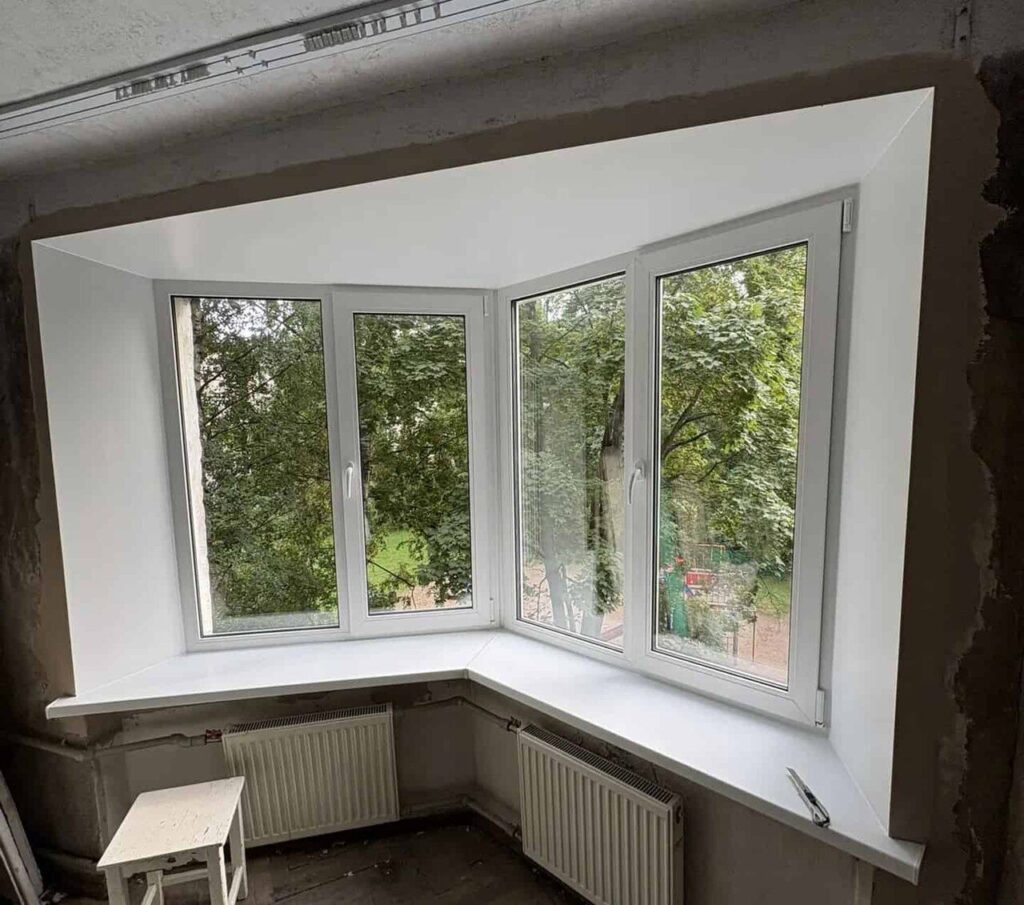
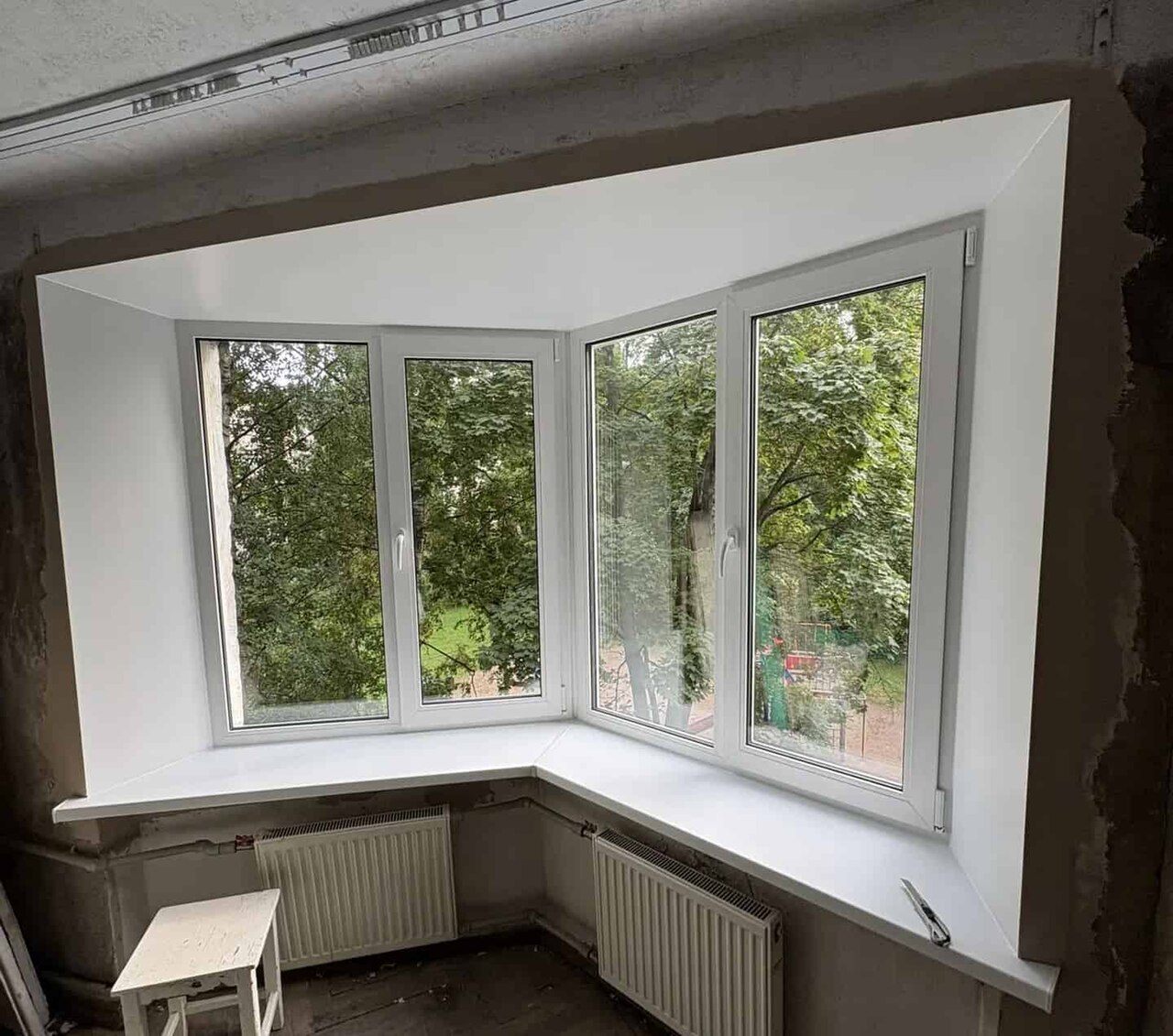
- Bay and bow: $1,700 to $3,859 – these are structural projects, not window swaps, with labor that can reach $800 or more per unit.
The Glass Package: Where Efficiency Money Goes
Glass choice is where up-front cost meets the energy bill. Survey averages put single-pane units around $400, double-pane around $529, and triple-pane around $609 – but installed, double-pane projects typically run $300 to $2,100 per window all-in, averaging near $1,000.
The common upgrades, priced: a low-E coating – the invisible layer that reflects solar heat and UV – adds about $50 to $100 per window and pays for itself in most climates; tempered safety glass adds $75 to $150 and is required by code in bathrooms and near doors; argon gas fills between panes are usually bundled with double- and triple-pane packages; impact-resistant laminated glass, standard in hurricane zones, adds 15 to 25 percent per window.
The payoff side is real but modest: among homeowners who replaced with double-pane windows, about a third reported lower monthly bills, most commonly $25 to $49 per month – roughly $300 to $588 a year. Double-pane won 76 percent of the market in recent surveys because it hits the efficiency-per-dollar sweet spot; triple-pane earns its premium mostly in very cold climates and against heavy street noise. Insulation elsewhere in the envelope multiplies what your windows achieve – our attic insulation cost guide covers the project that usually pays back faster than any glass upgrade.
Insert vs Full-Frame: The Install Decision
The same window costs different amounts to install depending on what it replaces. An insert installation keeps the existing frame and trim and sets the new unit inside it – faster, cheaper, and the default for homes with sound frames. A full-frame replacement tears out to the rough opening: new flashing, new trim, sometimes reframing. It costs more and it is the right call when the old frame is rotten, when you are changing the window size, or when the originals were poorly installed.
Labor typically runs $100 to $400 per window for straightforward replacements – roughly 15 percent of the total – and climbs from there for second-story work, difficult access, custom sizes, and especially structural units like bays. Rot or water damage discovered during tear-out is the classic budget surprise; set aside contingency for framing repairs. That same exterior shell logic applies to the rest of the envelope: the numbers pair naturally with our roof repair cost and gutter installation cost guides when a whole-house weatherization budget is coming together.
Brand Range and What the Quotes Should Show
Brands spread wide: Andersen installed units run roughly $400 to $4,000 depending on series, and Pella runs about $800 to $2,200. When quotes arrive, three line items separate a real bid from a bait number: the exact window unit and glass package (U-factor and low-E specified, not just “double-pane”), the install method (insert or full-frame, with flashing and perimeter insulation included), and disposal of the old units. Window quality that is poorly installed fails the same way a bad paint job does – slowly and expensively – and interior refreshes that follow a window swap are cheap by comparison; our interior painting cost guide covers the finishing touches.
The Bottom Line
Budget $450 to $1,200 per window for a standard replacement, with vinyl double-hung double-pane units as the value benchmark, $6,500 to $18,650 for a typical 10-to-15-window whole-house project, and extras of $50 to $150 for low-E or tempered glass where they are worth it. Get three quotes that specify the unit, the glass, and the install method – and the averages become a checklist instead of a mystery.