
Deck Cost 2026: What It Costs to Build per Square Foot
Deck cost in 2026 is rarely a single number because a deck is a small structure, not a surface. The boards are only part of it: framing, footings, railings, stairs, permits, and tearing out an old platform all show up on the invoice. Installed prices range from about $15 to $35 per square foot for pressure-treated wood, $25 to $50 for composite, and $40 to $75 for PVC, with labor eating 50 to 70 percent of a straightforward build. A 12-by-16 deck can land anywhere from $4,200 to $15,000 depending on material and finishes. Here is what drives the number, and where the honest savings are.
Deck Cost in 2026: Price per Square Foot by Material
Installed national ranges for a standard deck in 2026:
- Pressure-treated wood: $15 to $35 per square foot installed – the value benchmark. Material alone runs $3 to $20 before labor.
- Cedar or other hardwoods: $30 to $60 installed, for homeowners who want natural rot resistance and a premium look.
- Composite: $25 to $50 installed for most products; capped, premium lines can reach $40 to $80. Entry-level composite material starts around $3 to $6 per square foot, high-end capped boards $10 to $15.
- PVC: $40 to $75 installed – the top tier for low maintenance, with $3 to $8 of that being labor on a simple layout.
Translate that into real projects: a 12-by-12 deck (144 square feet) runs roughly $3,600 to $7,200 in wood, and $5,760 to $8,640 according to Angi’s survey. A 12-by-16 deck (192 square feet) costs about $4,200 to $7,500 in pressure-treated wood, $7,000 to $10,500 in mid-grade composite, and $10,500 to $15,000 in capped composite. With railings and stairs included, that same 12-by-16 build often quotes $8,900 to $15,400. A 16-by-20 deck commonly runs $12,000 to $18,000 in composite.
Where the Money Actually Goes
Labor is the single largest line on most deck projects – commonly 50 to 70 percent of the total, or $15 to $35 per square foot. It covers layout, digging and setting footings, framing, board installation, and finish work. A representative line-item budget for a full build shows framing and decking materials at roughly 22 percent, footings 6 percent, railings 9 percent, stairs 5 percent, labor about a quarter to a third depending on the source, plus a permit around 2 percent and a contingency of 4 to 8 percent.
Railings alone can add $1,500 to $7,000 depending on length and material – and on decks under about 30 inches high, skipping them is a legitimate saving where local code allows. Stairs are another distinct line. Footings matter more than they look: helical piles or concrete piers cost more than surface blocks but keep a tall deck from settling.
Regional labor swings the total by 30 percent or more. Northeast and West Coast markets typically run about 1.22 to 1.28 times the national average, while Southern markets run around 0.92 times it. A deck that costs $8,000 in Oklahoma City can be $10,000 in San Francisco before a single upgrade.
The Hidden Costs of a Replacement
If an old deck is coming out, demolition and haul-away runs $2 to $5 per square foot in most markets – higher where disposal fees are steep. Some surveys put full removal closer to $5 to $15 per square foot once trim boards and multiple layers are involved, which can add $1,000 to $3,000 to a 12-by-16 project. Permits typically cost $100 to $500; the exact figure depends on whether the deck is attached to the house, how high it sits, and what your local inspector requires.
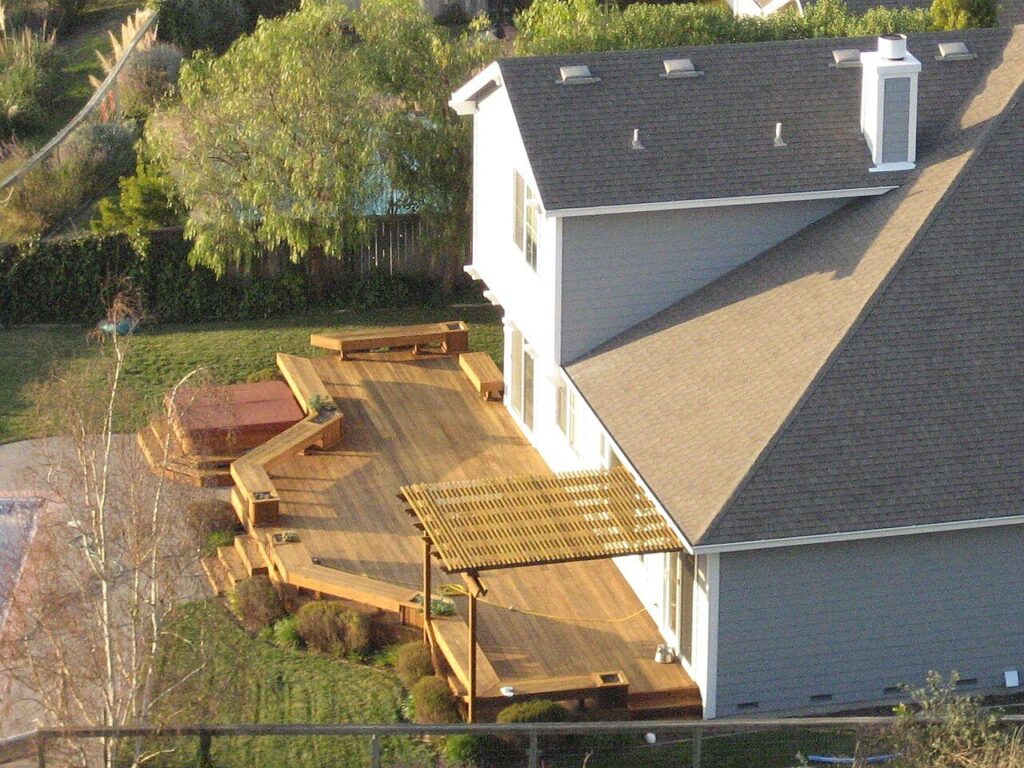
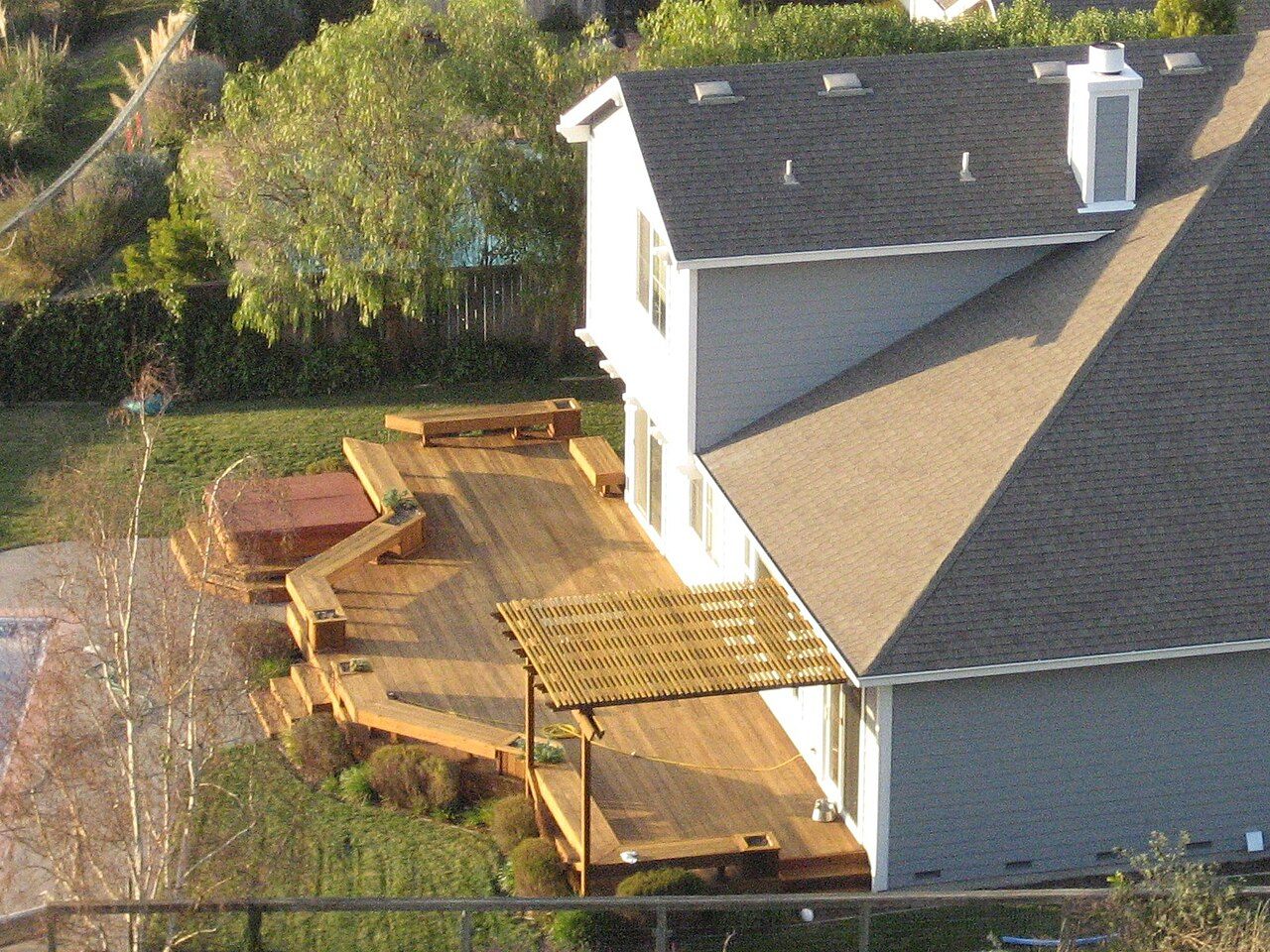
Then there is the cost nobody budgets: the difference between a flat, low platform and a raised, multi-level build with a pergola. Elevation multiplies footing depth, framing complexity, railing length, and labor hours all at once. Keep the deck close to grade if you want the lowest number – the same design principles apply to the other exterior projects in our roof repair cost and gutter installation cost guides, where access and height drive the bill.
Wood or Composite: The Real Tradeoff
Composite costs about 118 percent more up front than pressure-treated wood on a like-for-like 12-by-16 build – roughly $9,216 against $4,224 in one 2026 comparison. But pressure-treated wood needs staining or sealing on a regular schedule, and boards warp, splinter, and rot; over 25 years, the staining and partial board replacements narrow the gap sharply. Composite costs more on day one and close to nothing in annual upkeep, which is why it dominates resale-minded renovations. PVC goes further still on moisture and fade resistance at the highest price.
Wood still wins where initial budget rules, where a natural look matters, or where a DIY builder is doing the labor themselves. Composite rewards people who intend to stay and do not want another weekend of sanding and staining. If the deck is part of a larger outdoor makeover, the broader layout ideas in our backyard remodeling guide and the numbers in our flooring cost guide help keep the whole budget coherent.
Getting a Deck Quote You Can Compare
Ask each contractor to price the same scope: decking material and grade, framing lumber, footing type, railing material, stair count, permit handling, demolition, and disposal. A bid that omits footings or railings is not cheaper – it is incomplete. Confirm who pulls the permit, and get the footing specification in writing, since that is the line most likely to change after digging begins. With three comparable bids, the ranges above stop being abstract and become a budget you can actually hold.
The Bottom Line
Budget $15 to $35 per square foot for pressure-treated wood, $25 to $50 for composite, and $40 to $75 for PVC, installed. Plan a 12-by-16 deck at $4,200 to $15,000 depending on material, with demolition, permits, railings, and stairs as separate lines. Keep it low and simple if cost is the priority – elevation and accessories, more than board choice, are what turn a reasonable deck into an expensive one.