
Flooring Cost 2026: Installed Prices per Square Foot by Material
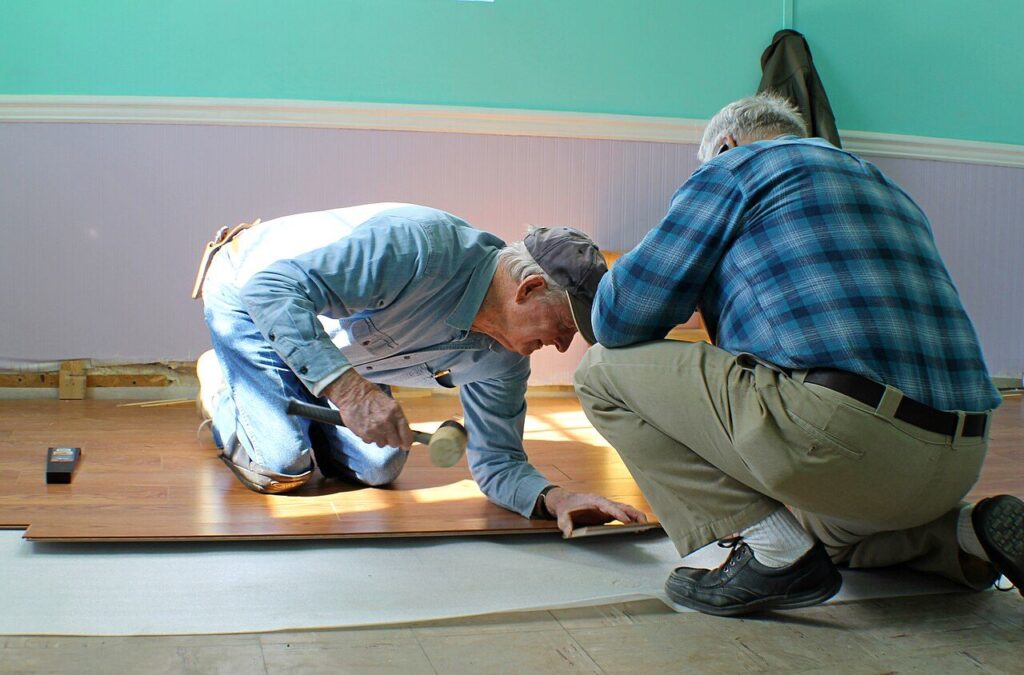
Flooring cost is one of those numbers where the square-foot price looks simple and the final invoice does not. Installed floors in 2026 run $3 to $25 per square foot for most materials, but that figure assumes a clean subfloor and says nothing about tearing out the old covering, leveling what is underneath, or finishing stairs and transitions. A 500-square-foot room can cost $2,000 in laminate and $12,500 in solid hardwood – same area, sixfold difference. Labor accounts for 40 to 60 percent of a flooring job, which is why the cheapest material is not always the cheapest floor. Here is how the 2026 prices break down, line by line.
Flooring Cost in 2026: The Short Answer
National cost guides put the typical installed floor at $4 to $15 per square foot, with a broad market range of $3 to $25 and a national average near $9 when all materials are pooled. Material choice is the biggest lever:
- Laminate: $4 to $14 per square foot installed – the budget standard, and fast to lay.
- Carpet (with pad): $3 to $12 – cheap material, cheap labor, shortest lifespan.
- Sheet vinyl: $2 to $10 – the lowest up-front price of all.
- Luxury vinyl plank (LVP): $4 to $16, with most jobs paying $5 to $12.
- Engineered hardwood: $7 to $20.
- Solid hardwood: $8 to $25 – premium material, skilled labor, sanding and finishing.
- Ceramic or porcelain tile: $7 to $31, with complex patterns running higher.
- Bamboo and cork: $7 to $17 and $5 to $15 respectively.
Scale that to a 500-square-foot room: roughly $2,000 to $7,000 for laminate, $2,000 to $8,000 for LVP, and $5,500 to $12,500 for solid hardwood. For a 1,000-square-foot area, hardwood projects commonly land between $6,000 and $18,000 depending on the source and the subfloor.
Why Labor Is 40 to 60 Percent of the Bill
Flooring is installed, not merely bought. Basic click-lock laminate, carpet and floating LVP run $1.50 to $3.50 per square foot in labor. Standard work – engineered hardwood, standard tile – runs $3 to $6. Complex jobs (solid hardwood nail-down, glue-down vinyl, custom tile patterns) run $5 to $10, and tile specialists quote $9 to $17 per square foot because layout, cuts, mortar, grout, and cure time all cost hours. Flooring installers typically charge $60 to $120 an hour, and big-city rates can run 40 percent above smaller markets.
Stairs and detail work are their own line items: carpet on a staircase runs $10 to $45 per step, and transitions and scribed trim add $1 to $2.50 per linear foot. Both are routinely forgotten in a quote comparison.
The Costs Hiding Under the Floor
Every old floor has to come up, and removal is rarely free: carpet $0.70 to $1.60 per square foot, laminate or LVP $2 to $3, hardwood $1.75 to $3.50, and tile $2 to $7. Subfloor repair or replacement adds $2 to $9 per square foot, with leveling on an old, uneven slab running from a few hundred dollars into the thousands. Water damage discovered mid-tear-out is the classic job-bleeder – older bathrooms and kitchens are the usual suspects.
Then there is waste: most installs buy 5 to 10 percent extra material for cuts, more for diagonal patterns. Underlayment, transition strips, baseboards, and furniture moving are separate line items. An honest bid itemizes all of them; a suspiciously low bid folds them into “installation” or leaves them out entirely. The other envelope projects work the same way – the pricing logic in our roof repair cost and gutter installation cost guides applies here too: the cheap line is rarely the whole line.
Choosing the Material for the Room
LVP is the workhorse of modern renovation: a wood look at roughly half the installed cost of solid hardwood, waterproof in practice, and suited to kitchens, basements, and busy hallways. Laminate is cheaper still but hates standing water, so it stays out of bathrooms. Engineered hardwood gives a real wood surface with better dimensional stability than solid, and costs less to install because it can be floated or glued in many situations. Solid hardwood is the premium, longest-lived option – and the one that needs nail-down installation plus sanding and finishing, which is why labor climbs. Tile wins in wet rooms and entryways, and loses on cost and time because of the cure-and-grout sequence.
If new floors are part of a whole-room refresh, the finish work pairs naturally with our interior painting cost guide, and the vinyl-versus-laminate tradeoff itself is unpacked in our vinyl vs laminate flooring comparison.
DIY or Hire: Where the Line Sits
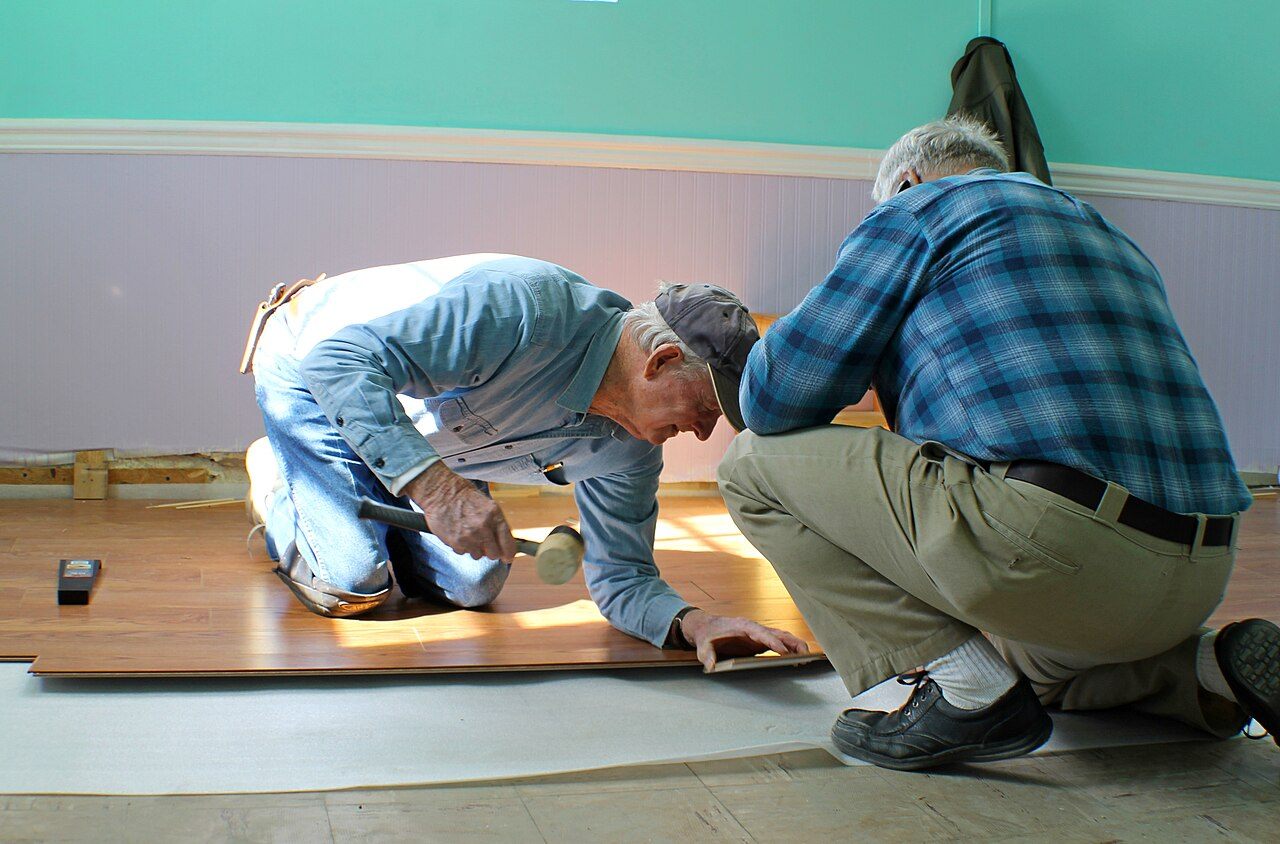
Floating click-lock floors are the most DIY-friendly flooring project: no adhesive, no nail gun, no finishing, and mistakes can be lifted and relaid. A handy owner can save the entire labor line on a laminate or LVP room, which is 40 to 60 percent of a professional quote. The catch is that subfloor flatness becomes your problem – an uneven slab telegraphs through thin planks and makes the click joints fail over time – and the specialty tools (a spacing kit, a pull bar, a saw with a fine blade) are not always in the average toolbox.
Solid hardwood, glue-down tile, and anything involving sanding or moisture barriers are pro territory: the failure modes are expensive and often invisible until months later. A middle path many owners take is to hire out the tear-out and subfloor prep – the messy, physically brutal part – then lay a floating floor themselves. That splits the savings and the risk sensibly.
Getting a Quote You Can Compare
Ask every installer to price the same scope: material per square foot, labor per square foot, tear-out, subfloor preparation, underlayment, transitions and trim, and waste. A $4 quote that excludes tear-out is more expensive than a $7 quote that includes it. Get three written bids, confirm the boxed material grade and wear layer on LVP, and ask who owns the subfloor repair if rot is found. The goal is not the lowest number per square foot – it is the lowest total for a floor that stays flat.
The Bottom Line
Budget $3 to $14 per square foot for laminate, carpet or LVP; $7 to $20 for engineered wood or tile; $8 to $25 for solid hardwood. Add $1 to $7 per square foot for removal, another $2 to $9 if the subfloor needs work, and keep a separate line for stairs and transitions. Three itemized quotes turn those ranges into a real budget.